The Netflix documentary film , Hack Your Healthis going viral after it highlight catgut - brainiac health , specifically at - home fecal transplants .
Hack Your Health: The Secrets of Your Gut, a Netflix documentary exploring the connection between gut health and brain function, hasbeen generating a lot of discussion on social media. One portion that has been specifically going viral isfecal transplants(the process of healthy poop being transplanted into an individual with an illness to improve the gut microbiome of the recipient).
The documentary features a woman named Daniell Koepke who talks about how she has found relief fromirritable bowel syndrome (IBS)by performing a DIY poop transplant at home, using her brother’s stool.
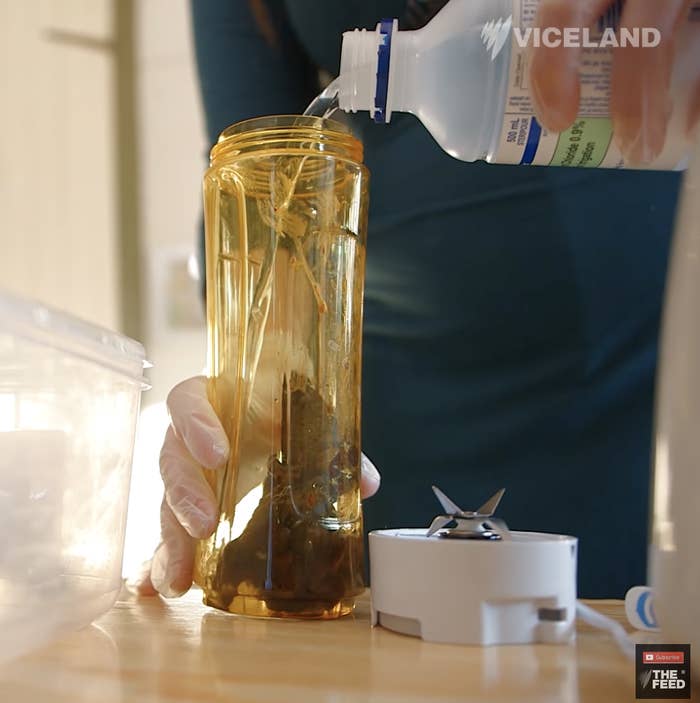
If you aren’t sure what an at-home poop transplant entails, you canfind videos on YouTube showing the process of blending fecal matter and encapsulating it for consumption.
“I think for most people it would be scary to do a fecal transplant, especially when it is DIY. I also think that most healthy people don’t know what it’s like to get to a place where your quality of life is so low. I felt like I had no other options,” Daniell said in the documentary. After ingesting her brother’s stool via pills, she was able to go to the bathroom for the first time in three years on her own.
Daniell also shared that after she started the fecal transplants, she developed worse acne (her brother struggles with hormonal acne). So, she decided to try her boyfriend’s stool instead. While her acne did stop after her boyfriend became a donor, she started noticing signs of depression (her boyfriend struggles with his mental health). Once Daniell switched back to her brother’s stool, she said the depression went away within a week.
To get more information, BuzzFeed turned to two experts to weigh in: Board-Certified GastroenterologistDr. Henry Herrerawho specializes in diagnostic/therapeutic endoscopy and gut health, as well as Internal Medicine DoctorLauren DeDecker.
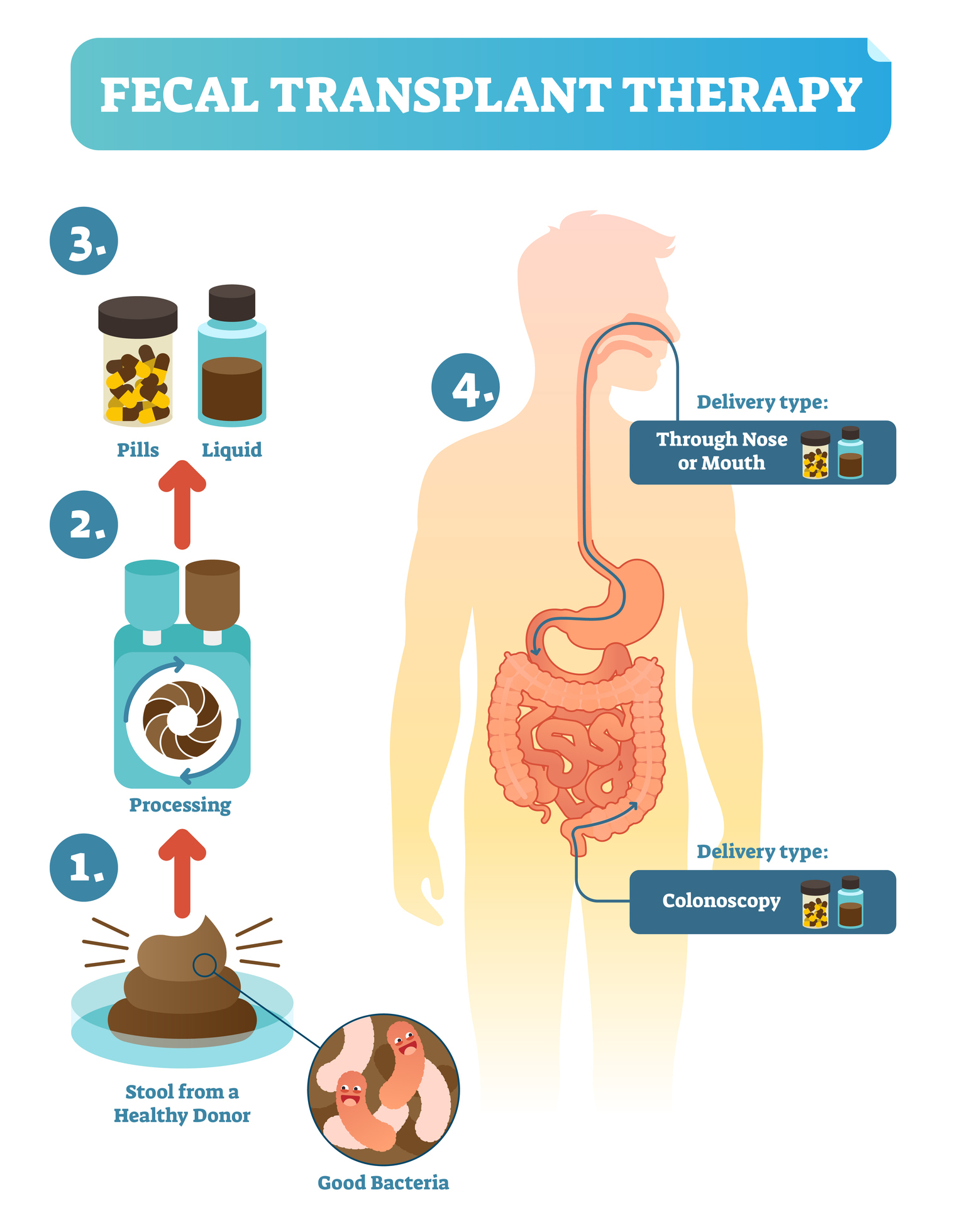
Herrera said a fecal transplant is a procedure in which healthy stool is transplanted into the large intestine of an individual with an illness to cure the infection by repopulating the patient with healthy, appropriately balanced gut flora.
Yep , I ’m contain a faecal transplantation specimen ! It ’s about to do a body unspoilt 🙂 > 90 % success rate against refractory C diff infection!#fyp#medicine#cdiff#diarrhea#gastroenterology#colonoscopy#medical
Both Herrera and DeDecker confirmed thatfecal transplants are currently being studied for the treatment of multiple mental health disorders,IBS, andobesity. However, most of them are still in preclinical trials.
All this being said, attempting to perform a fecal transplant at home isunsafe and not recommended. “Trying to do a DIY fecal transplant puts the individual at risk for infection, sepsis, and bowel perforation — which can be fatal,” said DeDecker.
Currently,fecal transplants are only FDA-approved for the treatment of recurrent C. diff infections. “When performed in a medical setting, recurrent rates forC diff are around 90%, with a low risk associated with it. Andfecal transplants absolutely workfor C. diff infection! I’ve performed plenty of them, and rarely do they require a repeat transplant to cure their infection.” Herrera said.
And Herrera said that while there is no definite proof that fecal transplants result in mental health benefits, it iswell-documentedthat thegut microbiome plays a major role in overall health. “So, it is certainly possible that it can serve some benefit for mental illness,” said Herrera.
To sum things up, when performed properly by medical professionals, a fecal transplant can fight infections like C. diff. — and having a healthy gut microbiome aids in overall health. Hopefully, with more research, we can learn about its connection with bowel disorders, mental health, and more.
Special thanks to both doctors — follow Herrera onInstagramandTikTokand DeDecker onInstagramandTikTok.